It’s Saturday morning, and the Johnsons finally have a free afternoon together. But instead of heading to the backyard for a swim, Dad is hauling out the pool vacuum while Mom skims leaves off the surface. The kids wait impatiently, and by the time the pool is swimmable, half the day is gone. Sound familiar? For busy families juggling work schedules, school activities, and household responsibilities, pool maintenance often becomes that dreaded chore that either consumes precious weekend hours or gets pushed aside entirely. When cleaning falls behind, the consequences pile up quickly—green water, slippery algae, and a pool nobody wants to use. This is where automated pool cleaning technology enters the picture. Can a pool vacuum robot truly solve this ongoing struggle, giving families their time back while keeping the water crystal clear? In this article, we’ll explore why pool maintenance is such a challenge for today’s families, how these robots actually work, the tangible benefits they deliver, and practical pool maintenance tips for implementing one into your routine. If you’ve been searching for a time-saving solution that doesn’t compromise on cleanliness, read on.
The Time Crunch: Why Pool Maintenance is a Challenge for Busy Families
Consider the typical family schedule: parents working full-time, kids bouncing between school, sports practice, and music lessons, and weekends packed with grocery runs, birthday parties, and the occasional attempt at relaxation. Now add pool maintenance to that equation. Manual cleaning demands at least two to three hours per week—brushing walls, vacuuming the floor, skimming debris, testing chemical levels, and emptying baskets. That’s time most families simply don’t have to spare.
When pool maintenance slips down the priority list, the consequences compound quickly. Algae begins colonizing surfaces within days of neglected brushing, turning walls slippery and water cloudy. Debris accumulates on the bottom, clogging filters and straining pump systems. Chemical imbalances create skin and eye irritation, making the pool uncomfortable or even unsafe for children. What was meant to be a source of family enjoyment becomes an eyesore and a liability.
The frustrating irony is that families who invest in pools do so for quality time together, yet the upkeep steals that very time away. Hiring a weekly pool service helps but adds significant recurring costs and still leaves gaps between visits. What busy families truly need are pool maintenance tips and tools that work around their schedules rather than demanding they rearrange their lives. The solution has to be something that operates independently, maintains consistent cleanliness, and requires minimal oversight—essentially, a system that handles the grunt work so families can simply enjoy the water.
See also: Boost Your Brand Reach What Tech Came Out in 2022 Jotechgeeks Web Solutions
Understanding Pool Vacuum Robots: How They Revolutionize Cleaning
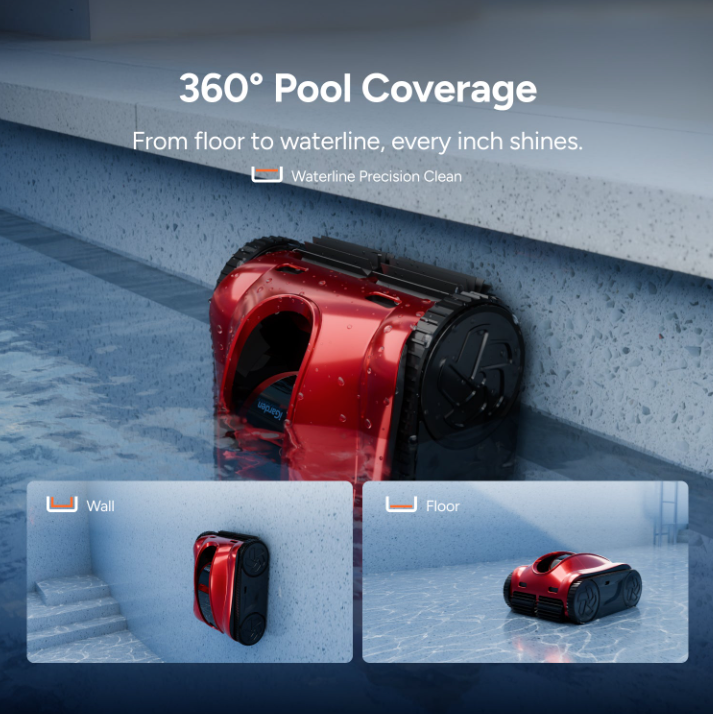
A pool vacuum robot is a self-contained, autonomous cleaning device that navigates your pool’s floor, walls, and waterline without connecting to your existing filtration system. Unlike traditional cleaning methods that require someone to physically guide a vacuum head back and forth, these machines operate independently once placed in the water. At their core, they contain an internal motor, an onboard filtration system, brushes or scrubbers, and intelligent navigation technology that maps your pool’s dimensions and surfaces.

To understand how automated pool cleaning has evolved, it helps to distinguish between the three main categories. Suction-side cleaners attach to your pool’s skimmer line and rely on the pump’s suction power to move randomly across surfaces—affordable but slow and dependent on your existing equipment. Pressure-side cleaners connect to the return jet and use water pressure to propel themselves while collecting debris in an attached bag, offering better performance but requiring a dedicated booster pump in many cases. Robotic pool cleaners represent the most advanced category, operating completely independently from your pool’s plumbing. They plug into a standard electrical outlet, run on low-voltage power, and contain everything they need onboard—from filtration canisters to programmable microprocessors.
What makes robotic models particularly revolutionary is their sensor-driven intelligence. Gyroscopes, accelerometers, and algorithmic mapping allow them to calculate efficient cleaning paths rather than bouncing randomly. Many models scan the pool’s shape during their first cycle, then optimize subsequent runs to cover every square inch systematically. This means no missed spots, no repeated passes over the same area, and thorough cleaning completed in as little as ninety minutes to two hours depending on pool size.
Key Features to Look for in a Robot
When evaluating a pool vacuum robot for your family’s needs, navigation technology matters most—look for models with smart mapping or gyroscopic guidance rather than random-pattern movement, as these clean faster and more thoroughly. The filtration system determines what the robot can capture; fine-mesh filters trap particles down to two microns, including pollen and fine sand that cloud water, while larger cartridges handle leaves and insects without clogging quickly. Energy efficiency is another practical consideration, since robotic cleaners use a fraction of the electricity your main pool pump consumes, often running an entire cycle for less than the cost of running a household light bulb. Families should also prioritize ease of maintenance—top-loading filter access means you can rinse cartridges in seconds rather than disassembling the unit. Finally, programmable scheduling capabilities allow you to set cleaning cycles during off-hours, so the robot finishes its work before anyone wants to swim, delivering a consistently clean pool without any daily thought or effort.
Benefits of a Pool Vacuum Robot for Busy Families: Solving Core Needs
The most immediate benefit a pool vacuum robot delivers is time—hours of it, returned to your family every single week. Instead of spending Saturday mornings wrestling with a manual vacuum or waiting for a service technician’s visit, automated pool cleaning happens silently in the background while you’re at work, running errands, or sleeping. That two to three hours of weekly manual labor simply disappears from your to-do list, replaced by the occasional thirty-second task of emptying a filter canister.
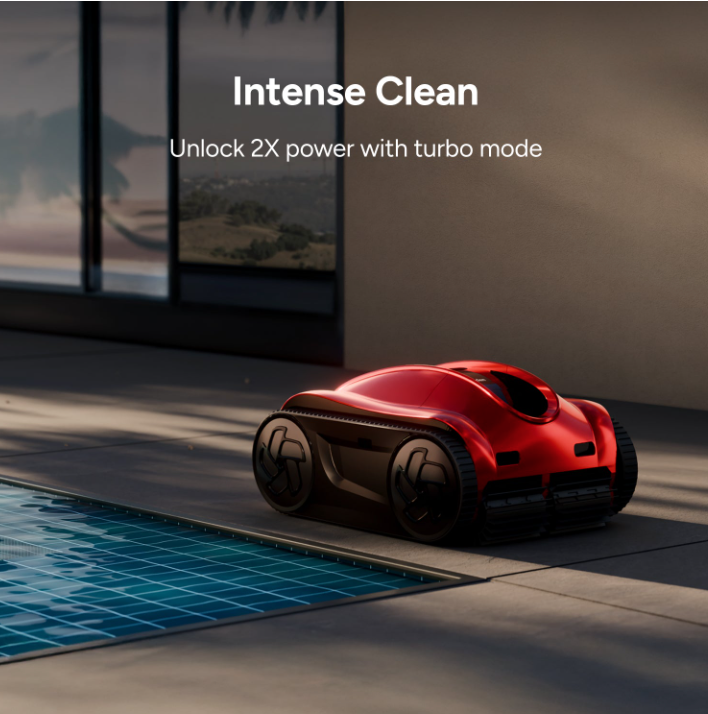
Beyond time savings, consistency transforms the entire pool ownership experience. A robot doesn’t forget to clean, doesn’t get tired halfway through, and doesn’t cut corners when nobody’s watching. By running on a programmable pool cleaning schedule—say, every Tuesday and Friday at 6 AM—the robot maintains a baseline of cleanliness that prevents problems from developing in the first place. Algae never gets a foothold because surfaces are brushed regularly. Debris never accumulates enough to strain your filtration system. Water chemistry stays more stable because organic matter is removed before it decomposes and throws off pH levels. This proactive approach means fewer chemical corrections, less filter maintenance, and dramatically reduced risk of the dreaded green pool scenario that requires expensive shock treatments to resolve.
The physical relief shouldn’t be underestimated either. Manual vacuuming involves bending, reaching, and pushing a heavy vacuum head through water resistance—genuinely exhausting work, especially in larger pools. For parents already physically drained from demanding jobs and childcare, eliminating this labor preserves energy for activities that actually matter. Over time, the financial equation also favors automation. Reduced chemical usage, lower energy consumption compared to running your main pump for cleaning purposes, decreased filter wear, and potentially eliminating or reducing professional service visits all contribute to meaningful cost savings that offset the initial investment within one to two seasons for most families.
Case Study: A Day in the Life with a Robot
Meet the Parkers—two working parents with three kids aged six, nine, and twelve. Before their robotic cleaner, Wednesday evenings meant Dad spending an hour vacuuming while the kids did homework, and weekends always started with a pool check that inevitably turned into a two-hour cleaning session. Now their routine looks entirely different. The robot is programmed to run every Monday, Wednesday, and Saturday starting at 5 AM. By the time the family wakes up, it has already completed its cycle and returned to its resting position at the shallow end. Mom lifts it out on Saturday mornings, rinses the filter basket under the hose for twenty seconds, and drops it back in—total effort under a minute. The kids cannonball into clean water after breakfast without anyone having to test whether the pool is “ready.” On Wednesday evenings, Dad coaches his daughter’s soccer practice instead of pushing a vacuum. The Parkers estimate they’ve reclaimed roughly ten hours per month, and their pool has never looked better because cleaning happens consistently regardless of how hectic their week becomes. The automated pool cleaning routine simply runs in the background of their lives, invisible until someone notices how effortlessly pristine the water always appears.
Implementing Your Automated Pool Cleaning System: Steps and Solutions
Selecting the right pool vacuum robot starts with understanding your specific pool environment. Measure your pool’s dimensions and note the surface material—plaster, vinyl, fiberglass, or tile each interact differently with cleaning brushes. Smaller pools under 30 feet benefit from compact models with shorter cycle times, while larger or irregularly shaped pools demand advanced navigation systems that can handle complex geometries without getting stuck in corners or tangled around ladders. Consider your primary debris challenge as well: homes surrounded by trees need robots with larger filter canisters and strong suction for leaves, whereas pools in open areas primarily contend with fine dust and pollen requiring ultra-fine filtration.
Once you’ve chosen your robot, creating an effective pool cleaning schedule is the key to hands-off maintenance. Most families find that three cycles per week maintains excellent water clarity during swimming season, while two weekly runs suffice during cooler months with lighter use. Schedule cycles to complete before peak swimming times—early morning runs mean the pool is pristine when everyone wakes up. Pair your robot’s schedule with a simple weekly checklist: rinse the filter canister after every second cycle, inspect the brushes monthly for wear, and check the power cord quarterly for any damage. These pool maintenance tips take minimal effort but dramatically extend your robot’s lifespan and cleaning effectiveness.
Common challenges have straightforward solutions. If your robot gets stuck on drain covers, aftermarket-compatible drain guards solve this immediately. Tangling on ladder rails is addressed by either removing portable ladders before cycles or choosing models with anti-tangle cord swivels. During heavy storm seasons when debris loads spike, running an extra manual cycle the morning after a storm prevents the filter from overwhelming during its next scheduled run. If cleaning performance seems to decline, the culprit is almost always a saturated filter—rinse it thoroughly or replace it if the mesh shows signs of deterioration.
Step-by-Step Setup and Scheduling Guide
Getting your robot operational takes about fifteen minutes from unboxing to first clean. Begin by fully charging the unit if it’s cordless, or connect the power supply to a GFCI-protected outlet within reach of your pool if it’s corded—never use extension cords. Place the robot in the shallow end, allowing it to sink and release trapped air bubbles for thirty seconds before starting the first cycle. Most models feature a one-button start for immediate cleaning, which serves as your initial mapping run where the robot learns your pool’s dimensions. After this first cycle, access the programming interface—either onboard buttons or a smartphone app—to establish your recurring pool cleaning schedule. Set specific days and start times that align with your family’s routine, choosing hours when nobody will be swimming. For families with smart home ecosystems, many current models integrate with platforms like iGarden that allow voice-activated commands or automation triggers, such as starting a cleaning cycle whenever everyone leaves the house in the morning. This integration transforms your automated pool cleaning system from a standalone device into a seamless part of your household management, requiring virtually zero daily attention while delivering consistently spotless results.
Reclaim Your Family Time with Automated Pool Cleaning
For busy families, a pool vacuum robot isn’t just a convenience—it’s a genuine solution to one of homeownership’s most time-consuming recurring chores. The math is simple: automated pool cleaning replaces two to three hours of weekly manual labor with seconds of occasional filter maintenance, returning hundreds of hours annually to families who desperately need them. Beyond the time savings, the consistency these robots deliver eliminates the frustrating cycle of neglect and catch-up cleaning that plagues most family pools. Surfaces stay brushed, debris stays collected, and water stays balanced because maintenance happens on a reliable pool cleaning schedule regardless of how chaotic life gets.
The practical pool maintenance tips outlined here—choosing the right model for your environment, establishing a smart schedule, and performing minimal upkeep—make implementation straightforward for any household. If your pool has become more of a burden than a backyard oasis, embracing this technology represents a meaningful step toward reclaiming family time. The future of home management lies in letting intelligent systems handle repetitive tasks so we can focus on what pools were always meant for—making memories together.